Plots in the network
1,047
Data source: public_origin_totals
Loading

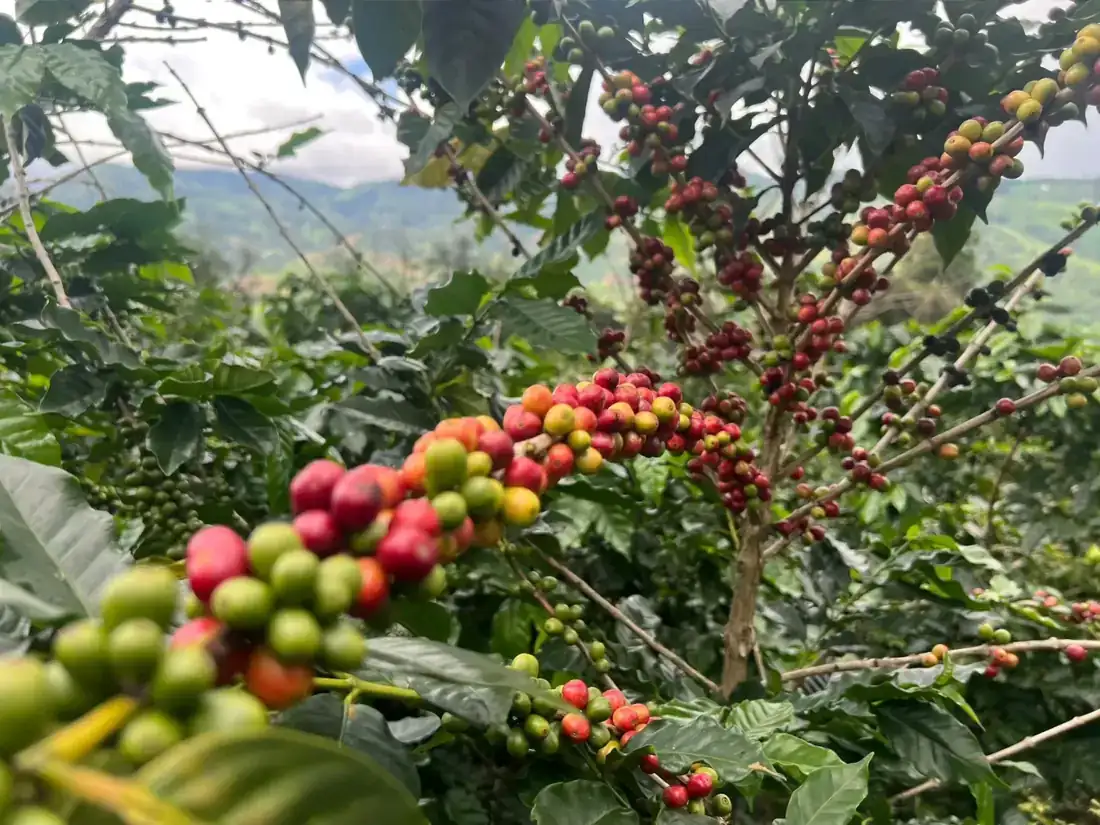
Each theme has its own page. Every figure comes from the same database we use to manage risk internally.
 Sustainability
GAP and Organic standards, EUDR readiness, and hotspot monitoring around every plot.
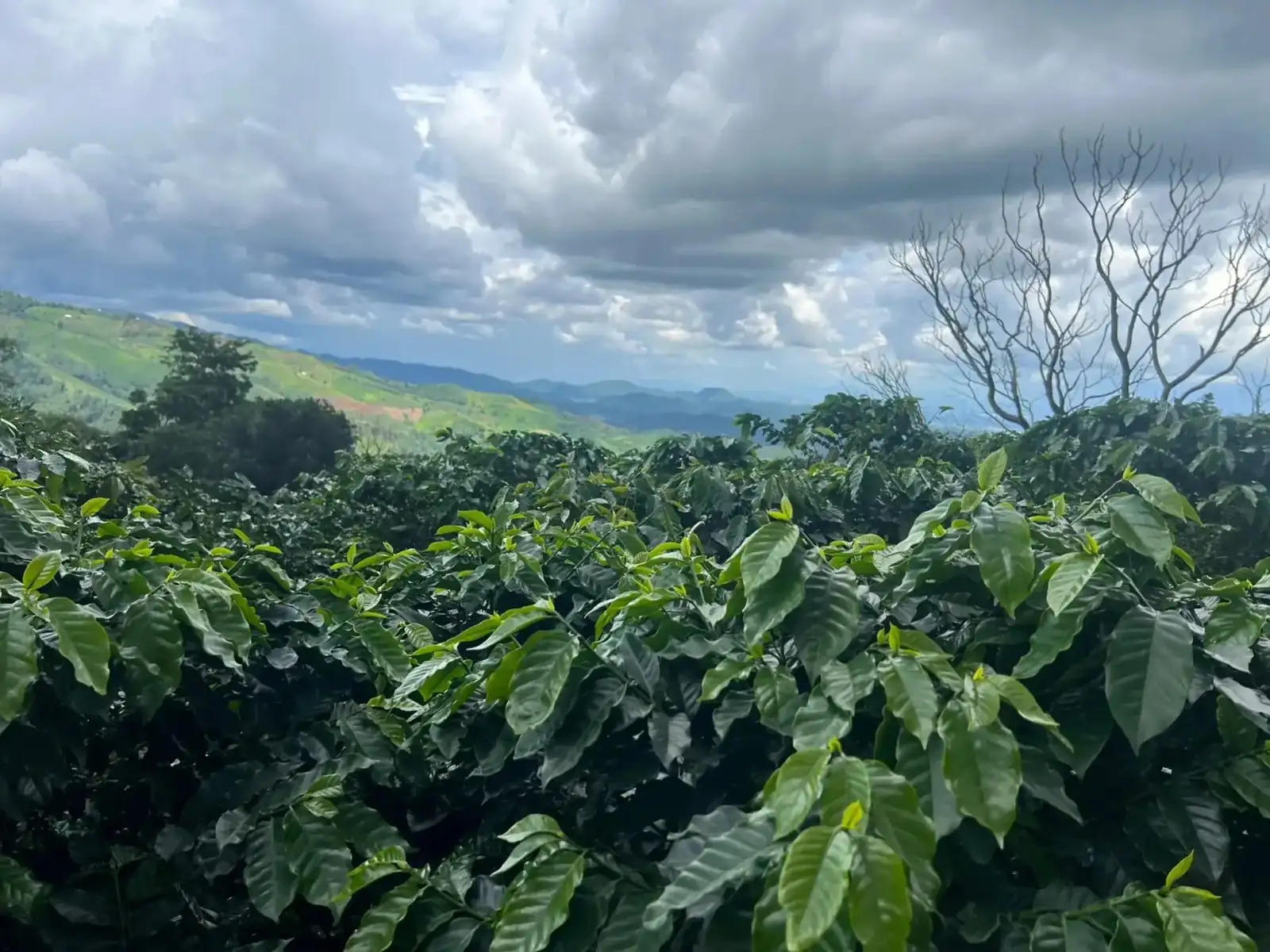
See the evidence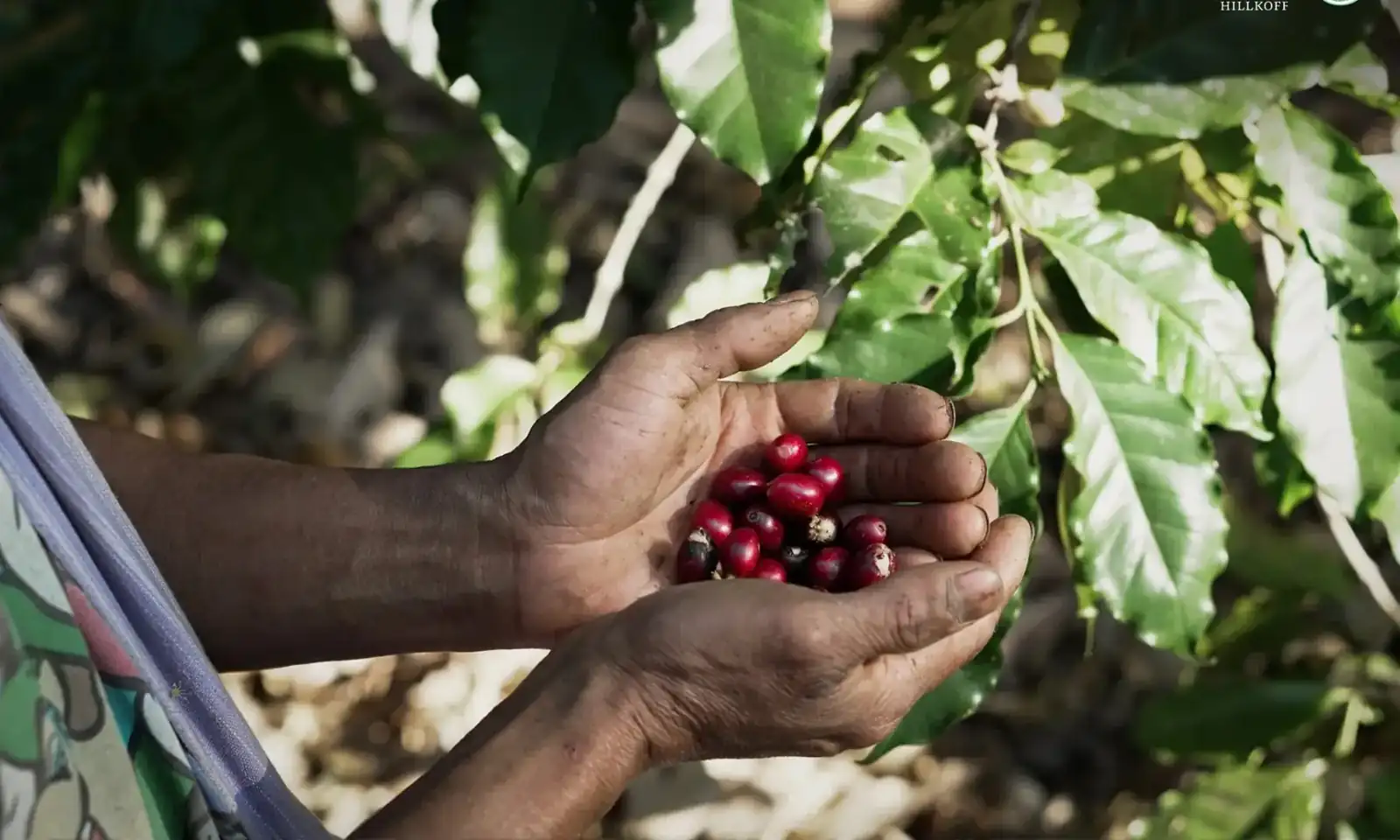 Traceability
The coffee journey from plot through buying station and processing to product, plus product-code lookup.
See the coffee journey Coffee origin
Search and filter plots by province, district, station and production type on a satellite map.
Explore the mapThese come from the same database we use to manage risk internally, and they move when the register moves.
Plots in the network
1,047
Data source: public_origin_totals
Unique farmers
955
Data source: public_origin_totals
Provinces covered
5
Kanchanaburi · Tak · Chiang Rai · Chiang Mai · Mae Hong Son
Data source: public_origin_totals
Plots with no hotspot ≤ 250 m
96%
1,008 / 1,047 of plots assessed
Data source: public_hotspot_summary
Area in the register
5,351
rai
Data source: public_origin_totals
Detections compared
385,757
190 days screened
Data source: public_hotspot_summary
Plots to look at again
39
a detection within 250 m
Data source: farm_hotspot_assessments
Coffee types in the register
5
GAP · Organic · Individual (GAP) · Individual (organic) · Group (organic)
Data source: public_origin_totals
Hillkoff is committed to sustainable development: balancing support for communities, people's wellbeing, care for the environment, and the profitability that pays for a better future.
The business follows the Sustainable Development Goals, covering environment, social and governance.
H
Highland agriculture is the foundation of Hillkoff, our identity past, present and future, and the mechanism through which environmental sustainability happens — forest, soil, air and water.
I
Bringing every discipline into the daily work process to find new opportunity based on local resources, and to create value out of it.
L
Working towards wellbeing across society. A company cannot run on a short-term view; it needs medium and long-term plans, and it has to understand how fast the context changes.
The coffee plot register with coordinates, standards and source communities, published to the extent approved — not a summary figure nobody can check.
See the register and the mapEvery plot is compared with NASA FIRMS satellite detections within 250 m, using data we neither produce nor can alter.
See the environmental evidenceWe publish which figures come from outside sources, which we check ourselves, what nobody has checked, and a record of every change to the figures.
See the assurance recordResponsible sourcing is not a recent campaign here. The company began inside the Thai and UN programme to replace opium cultivation, and the plot register published on this site is the same work, carried on with data.
1955
Census data showed highland communities in northern Thailand growing opium poppy as a cash crop out of economic necessity — an estimated 200,000 people and about 150 tonnes a year — alongside deforestation from shifting cultivation.
1967–1970
The Thai authorities invited the UN to draw up recommendations for progressively replacing opium cultivation with alternatives that would raise farmers' standard of living.
1971–1972
On 7 December 1971 the UN fund for drug abuse control in Thailand began, and the final version of the work plan was signed on 1 September 1972.
1973
Five key villages and eighteen satellite villages were selected, two experimental stations were set up at Chang Khien and Suan Song Saen Doi Pui, and coffee planting began in May 1973. In the same year one of the “opium to coffee” pioneers gathered hill tribe families who had traded handwoven cloth to collect pine cones instead, then turned to promoting coffee. The pine cone is Hillkoff's logo to this day.
1972–1979
The Thai/UN crop replacement and community development project ran as a pilot. It found arabica the most appropriate long-term cash crop: the land and climate suit it, transport and storage are relatively easy, yields are good and there is strong demand for quality highland coffee.
1978
UNDP Thailand representatives visited the Chao Thai Pu Kao shop in Chiang Mai and invited it to join the programme. Mr Theera Taksa-Udom founded Chao Thai Pu Kao Highland Agricultural Projects to strengthen the marketing of produce from the UN/Thai projects.
1980–1981
CTK-HAP began buying red kidney beans from the villages and lost the crop to weevils, which taught the team about storage and about guaranteeing a purchase price. In 1981 the UN imported Magkinnon disc pulpers and set up small pulping stations in key and satellite villages; one of them is on display at Hillkoff: House of Coffee and Tea in Chiang Mai.
1985
The coffee processing plant at Wang Sing Kham, Chiang Mai, started up. CTK-HAP announced it would buy arabica from farmers and placed promoters in the key villages, working with university researchers, UNDP staff, the Thai-Norway and Thai-German projects and NGOs to raise quality year by year.
1987
As cultivation and processing kept improving and highland livelihoods with them, UNDP supported expanding the planted area, and the first coffee factory in the northern region was completed, equipped with the first imported roasting machine.
1990
Roasting started on a shop roaster, a PROBAT L12, with the aim of producing high quality Thai arabica for coffee drinkers.
2001
The business passed to the next generation, and the highland agricultural mission continued with more intent: not only income and market access from the communities to the city, but responsibility for protecting the forest the communities live in.
2018
Innovation went into new products from coffee, and into other local species — a cultivated banana developed from a wild variety among them — so that the forest stays abundant and highland livelihoods hold.
2026
The company's organisational carbon footprint was certified, and organic parchment coffee was bought from highland farmers across four subdistricts of Omkoi — Sop Khong, Na Kian, Yang Piang and Mae Tuen — in an area supported by the Highland Research and Development Institute.
October 2026
The register of 1,047 coffee plots was published with coordinates, standards and the 250 m hotspot check against 385,757 NASA FIRMS detections, together with pages on data governance, assurance and changes, so that an outsider can check our figures without taking our word.
Entries up to 2018 are transcribed from Hillkoff's corporate history page on the main site. The 2026 entries are this site's own record and can be checked against the pages they name. Corporate history on hillkoff.com · Read the full history
A record of work in the field, purchasing, certification and research, newest first.
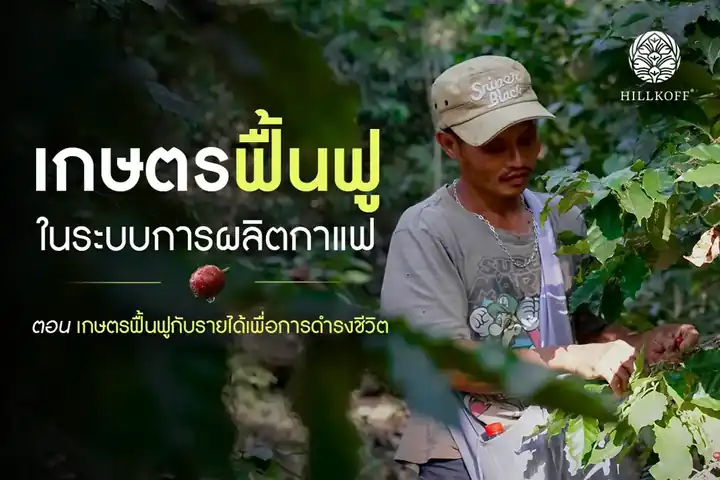
Sustainability ·
How regenerative farming can reduce income risk for smallholder highland coffee farmers.
Read the article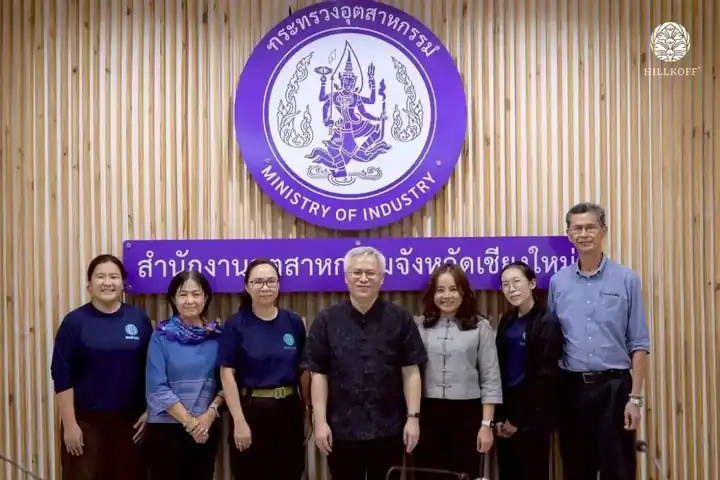
Traceability ·
Evaluating and selecting quality coffee from local farmers and producers in Chiang Mai's high-value coffee project.
Read the article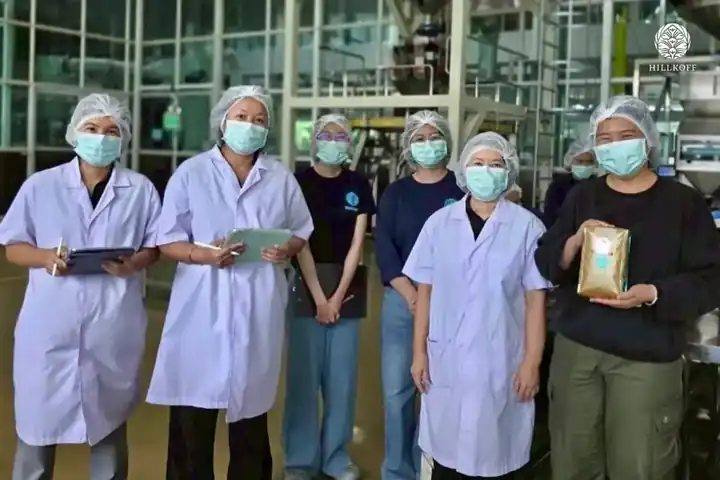
Traceability ·
Hosting ACFS to pilot Good Agricultural Practice for coffee under the Thai agricultural standard.
Read the article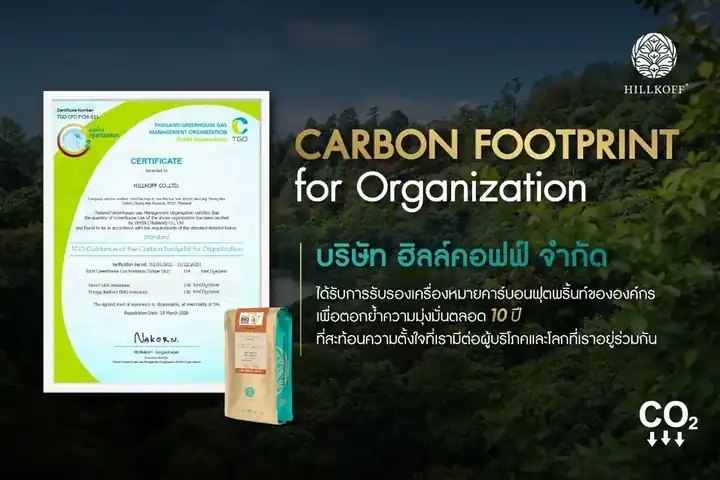
Sustainability ·
Building on ten years of work to cut greenhouse gas emissions.
Read the article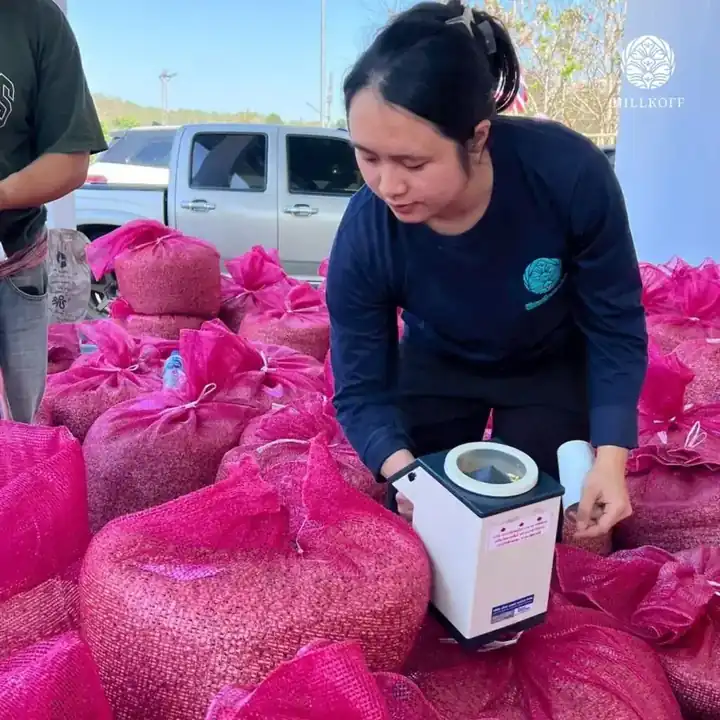
Coffee origin ·
From four subdistricts, Sop Khong, Na Kian, Yang Piang and Mae Tuen, supported by the Highland Research and Development Institute.
Read the article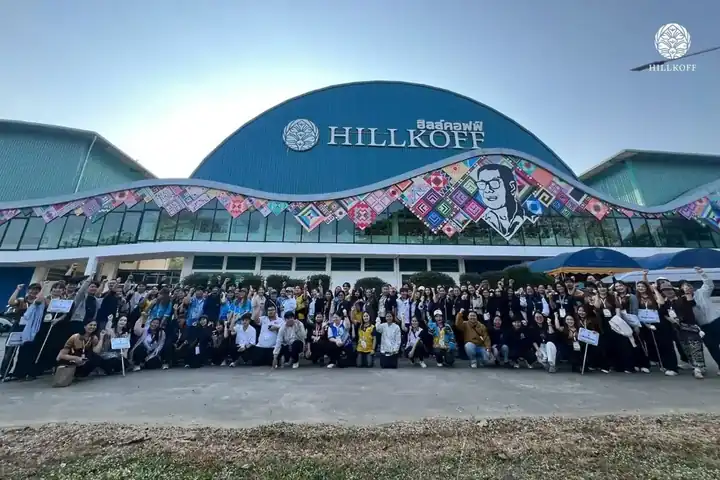
Traceability ·
131 students and lecturers from 9 universities studied the coffee chain at our Chiang Mai learning centre.
Read the articleSee every article under each theme: Sustainability · Traceability · Coffee origin
No. A hotspot means the satellite detected unusual heat in a pixel about 375 m across, and the source may be outside the plot. We call it “flagged for review” and send our team to ask on the ground.
It covers the error in the satellite pixel and in the plot coordinates while still separating nearby detections from forest fires further away. We chose a strict distance even though it flags more plots for review.
NASA FIRMS VIIRS products from Suomi NPP, NOAA-20 and NOAA-21. This set covers 1 Jan – 30 Jul 2026, 190 observation days, and the ground between lat 15–21 and lon 97–100. Outside that box there is no data yet.
Each plot is stored as a single coordinate, which shows where coffee is grown without publishing the shape of anyone's land.
The farmer's name, gender, ethnic group, plot coordinates, area and location down to the village, all approved for publication by management. It does not publish contact details, personal documents, per-plot yields or per-person purchase volumes.
The EU Deforestation Regulation requires certain commodities, including coffee, to show plot coordinates and confirm they do not come from deforested land. The plot register and hotspot screening here are part of our preparation.